
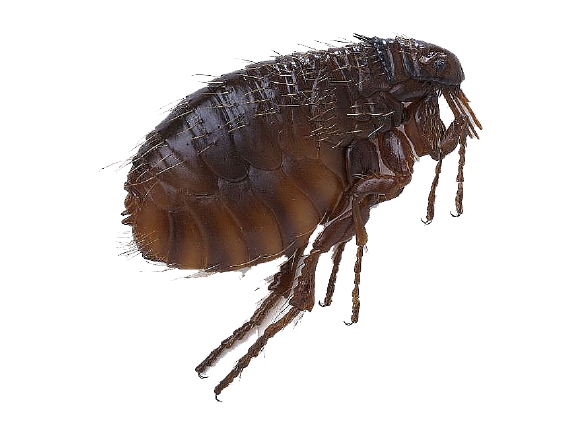
Fleas are not only an itchy nuisance, but may also be a disease risk for you and your pets. Cats and dogs can develop mild to severe flea allergy dermatitis, flea bite anemia, and internal parasites like tapeworms. People, especially children, are sometimes exposed to the parasites through interaction with flea-infested pets.
A pet’s first introduction to a flea is usually outdoors – indoor pets rarely host fleas. In northern and Midwest states, fleas are seasonally active during spring, summer, or both. In southern and tropical states, they are active most of the year. Fleas favor warm and moist conditions, from 70 to 90° F and above 75% humidity.
Other sources of fleas include used rugs and upholstered furniture, as well as visiting animals. Adult fleas jump onto a new host either from an infested animal or from the areas where an infested animal rests. In a yard, moist and shaded soil in warm weather is attractive both to fleas and their hosts. Once on a pet, an adult flea burrows to the skin, bites the animal to get a good blood meal, and then settles in to reproduce.